Who Tells The King They Are Wrong?
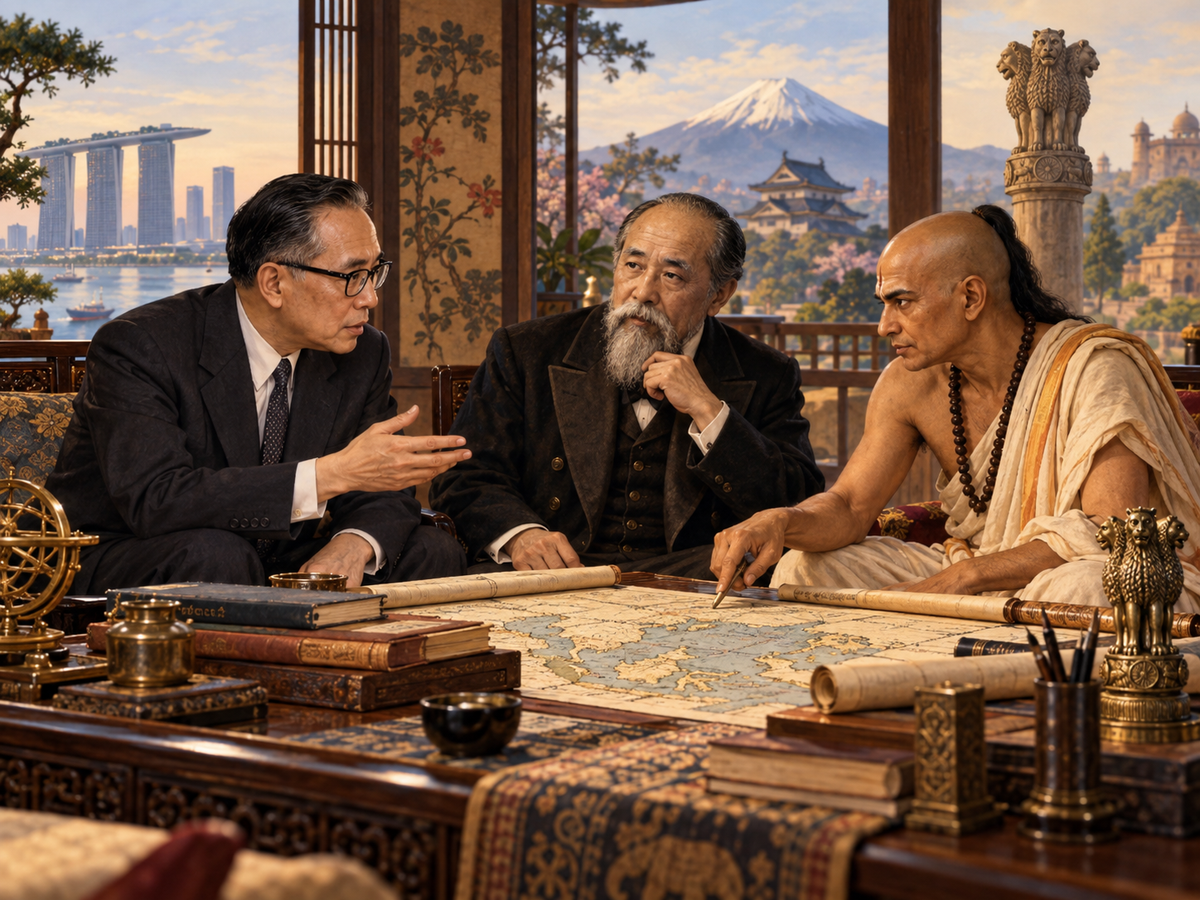
While it is the monarch who wears the crown, it is their trusted advisor whose wisdom is worth its weight in gold.
Kings, queens, leaders, CEOs, executives, and other public figures often receive the sole credit and glory for their accomplishments.
However, it is usually the unseen influence of their trusted advisor that guides them in the right direction.
Behind every leader's success is an advisor who has significantly contributed to their achievements.
This is because the advisor is the one who doesn’t hesitate to tell the King that they are wrong.
The more powerful one becomes, the easier it is for them to act; however, their power shelters them from the reality that surrounds them. This is because a barrier of close confidants lies between the King and reality. These confidants are often, for a variety of reasons, reluctant to show the King the full reality.
The King is surrounded by “yes men.” The inner circle proceeds cautiously when delivering bad news. There’s a fear that disagreement will be costly. An unwise and overly emotional leader can react poorly to disagreement.
They can see their dissenters as disloyal and potentially dangerous. They can develop a paranoia that their inner circle is conspiring against them. This same paranoia is often shared amongst the members within the inner circle. The inner circle may worry that one simple disagreement, one criticism, one alternative perspective, can land them in hot water.
The advisor, however, isn’t afraid to speak up. And a wise King isn’t afraid to listen.
One of the greatest privileges of holding power is having a group to manage that is often obedient to you. However, one of the greatest curses of holding power is having a group that is always obedient to you.
For the leader to remain in power, achieve their goals, and realize their vision, they must have a trusted advisor by their side.
A leader doesn’t need just one advisor who is seen as right. Instead, a great leader can have a group of advisors who bring diverse perspectives and expertise across fields. This was what Lee Kuan Yew had with the other Founding Fathers of Singapore.
Lee Kuan Yew’s team had many other talented individuals who not only advised him but took an active role in the foundation of the Singapore we know today. One of these stalwarts was Dr. Goh Keng Swee.
Lee Kuan Yew wasn’t in favor of the separation of Singapore from Malaysia, and he had instructed Dr. Goh to try to negotiate an agreement to stay within Malaysia – and that independence should be a last resort.[1]
However, Lee found out many years later that Dr. Goh did not pursue the looser arrangement Lee wanted. Instead, he negotiated for a clean break - seeing separation as the better option. It was nonetheless an advisor deviating from what the leader wanted.
This is a challenge for many advisors – if they have blind obedience, they cannot tell the King when they are wrong. If they deviate too much, they undermine the leader’s authority – and can jeopardize their vision.
Nevertheless, Dr. Goh had determined that the best way for Singapore to choose its own destiny, was to have complete independence.
Dr. Goh was by no means someone who made hasty or rash decisions. He was a formidable talent in his own right – and eventually served as Singapore’s first Finance Minister, prior to independence. He would later serve as the Defense Minister, Education Minister, and Deputy Prime Minister.
He also played a major role in creating and shaping several of Singapore’s institutions, including the Economic Development Board, the Monetary Authority of Singapore, and the Singapore Armed Forces – where he decided to introduce compulsory National Service, which remains a key to ensuring Singapore’s sovereignty.
Lee recognized Dr. Goh’s brilliance and would often give him the toughest tasks – even treating him as his “troubleshooter.” [2]
As Finance Minister, he faced a challenge: the government was expecting a deficit of nearly $14 million. Dr. Goh made a series of strict decisions, including expenditure cuts, to tackle the deficit. By the end of the year, the government didn’t record a deficit – rather, they had a surplus of nearly $1 million. This was in 1959, his first year as Finance Minister.
He also withstood criticism and resisted external pressure.
He faced significant criticism as he pushed for the development of the Jurong Industrial Estate – so much so that his critics dubbed the project “Goh’s Folly.” By 1968, Jurong had nearly 300 factories and employed nearly 21,000 workers.[3]
These early successes and fortitude shaped Dr. Goh, making him an ideal candidate for Lee Kuan Yew’s inner circle. His independent thinking came not from arrogance or an inflated ego, but from his competence and results.
By 1965, relations between Singapore and Malaysia had soured, and Lee had two solutions in mind. One possibility was for Malaysia to be a confederation – in which Singapore would be largely autonomous but would still have to remit a portion of its tax revenue to Malaysia.
The other solution was for Singapore to have much greater autonomy – more than any other region of Malaysia, as if it were a sovereign nation.
Complete separation was an option, but for Lee, it was a last resort he hoped Singapore would never have to face.
Dr. Goh, in contrast, felt that a complete separation was the best solution for Singapore’s future.
As The Albatross File would reveal almost thirty years later, Dr. Goh pursued neither of Lee's proposed solutions. Instead, he worked toward Singapore's separation from Malaysia and its emergence as a sovereign state.
Lee was apparently startled to learn that Dr. Goh had planned in 1965 to achieve independence. He later learned of Dr. Goh’s actions in 1994.
By then, Singapore's success after separation was clear.[4]
Dr. Goh wasn't acting recklessly or without foresight. He had experience building institutions, an understanding of history, and knew the challenges Singapore would face in carving out its own destiny if it didn't maintain its sovereignty.
In terms of his expertise, Dr. Goh is best described as an independent advisor. An obedient advisor often follows orders without question. A competent advisor decides the best approach to reach an outcome. An independent advisor questions the premise even before suggesting a course of action.
Dr. Goh’s foresight was the right decision for Singapore, and his role went far beyond advising. He was a key player in building Singapore. Lee Kuan Yew held him in lasting admiration and respect for his contributions.
The cornerstone of Singapore’s success was Lee Kuan Yew’s brilliant and firm leadership. It was also his delegation to his compatriots whose wisdom he respected. S. Rajaratnam laid the ground for creating a stable and harmonious society that consisted of multiple races, linguistic preferences, and religious convictions.
Among his achievements was drafting Singapore's National Pledge, which calls on Singaporeans to be "one united people, regardless of race, language or religion."[5]
Dr. Toh Chin Chye and Lee Kuan Yew had been colleagues and later founded the People’s Action Party together along with Dr. Goh, S. Rajaratnam, and several others. He would later become Singapore’s first Deputy Prime Minister.
In 1968, he became Vice-Chancellor of the University of Singapore, which later became part of the National University of Singapore. In this capacity, he prioritized engineering and architecture programs, helped build the university's Kent Ridge campus, and was instrumental in the development of the National University Hospital.[6]
Lee Kuan Yew sought counsel from these men. But he didn’t stop there. He gave them institutions to build and through their wise decisions and swift action, they built the Lion City.
Lee Kuan Yew surrounded himself with exceptional talent. But what happens when a government can’t always find such individuals? Can the right counsel be built into the system from the start?
Over a century earlier, Meiji Japan had addressed these questions.
For over two centuries, the Tokugawa shogunate governed Japan. The Emperor remained deeply revered, while the shogun and the feudal domains held political power. This era brought peace and prosperity, though Japan was still divided into feudal territories and strict social classes.[7]
In 1853, American warships arrived and pressured Japan to open its ports, exposing its military vulnerability to Western powers. The shock weakened the shogunate and intensified calls for major reform.[8]
Emperor Meiji ascended the throne at just fifteen. During his reign, Japan dismantled the old feudal system, strengthened the central government, modernized its military and economy, and built a constitutional state.[9]
One key figure behind the Meiji Restoration was Itō Hirobumi.
From a modest samurai background, Itō had once supported resisting Western influence. However, after traveling to Britain, he realized that Japan needed to learn from the West – though not simply copy it. He wanted to adopt what was useful from the West while preserving Japan's own identity and imperial tradition.[10]
In the 1870s, Itō traveled through the United States and Europe as part of the Iwakura Mission, studying how other countries governed themselves. In 1882, Emperor Meiji sent him back to Europe to study constitutional government. Itō spent more than a year examining parliaments, cabinets, courts, and constitutions in countries including Germany, Austria, and Britain.[11]
He returned to Japan and helped turn those lessons into institutions.
In 1885, Japan replaced its older system of government with a Cabinet, and Itō became the country’s first Prime Minister. Three years later, he became the first head of the Privy Council, established to advise the Emperor on major matters of state.[12]
Emperor Meiji came to trust Itō deeply. But Itō did more than offer him advice. He helped build a system around the Emperor that allowed experienced statesmen to debate important decisions.
When Japan's new Constitution was being debated, Emperor Meiji attended the Privy Council meetings while Itō chaired the discussions. Drafts were examined, and arguments were made, with the Emperor involved throughout.
Then, in 1889, the new Constitution formally stated that ministers would advise the Emperor and that the Privy Council would deliberate on important matters of state.[13]
This was not modern democracy as we understand it today. The Emperor still held enormous authority.
But something important had changed: advice was no longer simply something a ruler might choose to seek. It had become part of the machinery of government.
Itō hadn’t merely become a trusted advisor to a powerful ruler. He helped create a system to ensure the ruler would continue receiving advice even after the people around him were gone.
Singapore showed us the value of exceptional people around a leader. Meiji Japan showed us something more: how to build counsel into institutions.
This idea, however, did not originate in Meiji Japan.
Over two millennia earlier, ancient Bharat, or ancient India, had already developed an extraordinarily detailed theory for how a ruler should choose advisors, gather information, test their judgment — and govern a land and its people, and sustain a civilization.
That brings us to Chandragupta Maurya and Chanakya.
In the late fourth century BCE, Chandragupta Maurya built the Mauryan Empire, with Chanakya serving as advisor and strategist. Chandragupta Maurya overthrew the Nanda dynasty and created a state that eventually controlled much of the Indian subcontinent.
Chandragupta confronted Seleucus, one of Alexander’s successors. The conflict ended with the expansion of Mauryan control in the northwest and established diplomatic relations between the two powers. The Mauryan Empire now dominated most of the Indian subcontinent.[14]
Establishing an empire was one thing. Governing it was another.
The Mauryan state developed a large administration, with ministers and officials responsible for areas such as taxation, agriculture, trade, roads, irrigation, justice, and the military. The empire was divided into provinces, allowing the central government to govern territory far from the capital at Pataliputra.
One concrete example was the Sudarshana reservoir in Gujarat. It supported irrigation and remained important enough that later rulers repaired it centuries later. Government, in other words, was not simply about armies and conquest. It was also about water, roads, agriculture and economic life.[15]
Chanakya laid out his thinking in the Arthashastra. And one of his clearest ideas was that a king could not govern alone.
He wrote:
“Sovereignty is possible only with assistance. A single wheel can never move.”[16]
The ruler needed ministers, and Chanakya also suggested how to use them.
For difficult decisions, he recommended consulting several ministers — sometimes individually and sometimes together.
The Arthashastra states:
“He shall despise none, but hear the opinions of all.”[17]
This is highly relevant to our question. Chanakya was not asking the ruler to surrender his authority. The king still made decisions, but before doing so, he was expected to hear other perspectives and to offer his own.
Chanakya was serious about choosing the right people. Ministers needed intelligence, judgment, courage, memory, experience and integrity. And once appointed, officials were not simply trusted forever. Their work, spending and results had to be checked. [18]
Chanakya understood a problem that every large organization still faces: the people advising the ruler can themselves become corrupt, incompetent, or dishonest.
He also understood that good decisions require good information. The Arthashastra describes an extensive intelligence system because the king could not rely only on what people around him chose to tell him.
In foreign affairs, Chanakya was just as practical. War was only one tool. Alliances, negotiation, treaties, economic pressure, and intelligence all had their place depending on the circumstances.[19]
Many of these ideas are still applied today, in India and far beyond.
Chanakya understood something more than two thousand years ago that remains true in governments, companies and institutions today:
The greater the responsibility of the person at the top, the more dangerous it is for that person to depend only on their own judgment.
Chandragupta had the authority to rule. Chanakya helped provide the knowledge, strategy, and structure to use that authority.
The throne may belong to one person. Wisdom need not.
So, who tells the King they are wrong?
It’s not one brave advisor. It is the people, habits and institutions that make honest and constructive counsel possible.
Lee Kuan Yew trusted exceptional people.
Meiji Japan began building counsel into the state.
Chanakya showed that effective rule depends on ministers, information, and tested judgment.
Power gives one person the final say.
The strongest leaders make sure they are never the only voice in the room.
Speech written by Raghav Suri.
Copyright 2026 Raghav Suri. All Rights Reserved.
[1] Lee, Hsien Loong. “SM Lee Hsien Loong at the Launch of the Albatross File Book and Exhibition.” Prime Minister’s Office Singapore, 7 Dec. 2025, https://www.pmo.gov.sg/newsroom/sm-lee-hsien-loong-at-the-launch-of-the-albatross-file-book-and-exhibition/. Accessed 26 Sept. 2026.
[2] Lee, Kuan Yew. “Eulogy by MM Lee Kuan Yew at the State Funeral Service for the Late Dr Goh Keng Swee.” Prime Minister’s Office Singapore, 23 May 2010, https://www.pmo.gov.sg/newsroom/eulogy-minister-mentor-lee-kuan-yew-state-funeral-service-late-dr-goh-keng-swee/. Accessed 26 Sept. 2026.
“Goh Keng Swee: Architect of Modern Singapore.” Roots, National Heritage Board, https://www.roots.gov.sg/stories-landing/stories/goh-keng-swee/story. Accessed 26 Sept. 2026.
[3] Lee, Hsien Loong. “Eulogy by PM Lee Hsien Loong at the State Funeral Service for the Late Dr Goh Keng Swee.” Prime Minister’s Office Singapore, 23 May 2010, https://www.pmo.gov.sg/newsroom/eulogy-prime-minister-lee-hsien-loong-state-funeral-service-late-dr-goh-keng-swee/. Accessed 26 Sept. 2026.
Lee, Hsien Loong. “PM Lee Hsien Loong at the JTC 50th Anniversary Dinner.” Prime Minister’s Office Singapore, 16 May 2018, https://www.pmo.gov.sg/newsroom/pm-lee-hsien-loong-jtc-50th-anniversary-dinner/. Accessed 26 Sept. 2026.
[4] Lee, Hsien Loong. “SM Lee Hsien Loong at the Launch of the Albatross File Book and Exhibition.” Prime Minister’s Office Singapore, 7 Dec. 2025, https://www.pmo.gov.sg/newsroom/sm-lee-hsien-loong-at-the-launch-of-the-albatross-file-book-and-exhibition/. Accessed 26 Sept. 2026.
[5] Lee, Hsien Loong. “PM Lee Hsien Loong at the 41st Pre-University Seminar 2010.” Prime Minister’s Office Singapore, 1 June 2010, https://www.pmo.gov.sg/newsroom/speech-mr-lee-hsien-loong-prime-minister-pre-university-seminar-01-june-2010-1040am/. Accessed 26 Sept. 2026.
[6] Lee, Hsien Loong. “Condolence Letter from PM Lee Hsien Loong on the Demise of Former DPM Dr Toh Chin Chye.” Prime Minister’s Office Singapore, 3 Feb. 2012, https://www.pmo.gov.sg/newsroom/prime-minister-lee-hsien-loongs-condolence-letter-demise-dr-toh-chin-chye/. Accessed 26 Sept. 2026.
“Toh Chin Chye.” Roots, National Heritage Board, https://www.roots.gov.sg/stories-landing/stories/toh-chin-chye/story. Accessed 26 Sept. 2026.
[7] Stanley, Thomas A., and R. T. A. Irving. “Tokugawa Political System.” Hong Kong University History, 25 Aug. 2000, http://hkuhist2.hku.hk/nakasendo/tokupols.htm. Accessed 26 Sept. 2026 via Wayback Machine (Internet Archive)
[8] “1-1 Opening of the Country-Dawn of the Modern Era.” Modern Japan in Archives, National Diet Library, Japan, https://www.ndl.go.jp/modern/e/cha1/description01.html. Accessed 26 Sept. 2026.
[9] “Mausoleum of Emperor Meiji.” Japan Tourism Agency, 2019, https://www.mlit.go.jp/tagengo-db/common/001561754.pdf. Accessed 26 Sept. 2026.
[10] “Part 2: Modern Era, Chapter 2: Past Prime Ministers 1.” National Diet Library, Japan, https://www.ndl.go.jp/en/jikihitsu/part2/s2_1. Accessed 26 Sept. 2026.
“The Chōshū Five: Makers of Modern Japan.” Portico Magazine, University College London, Autumn 2023, https://magazine.ucl.ac.uk/the-choshu-five/. Accessed 26 Sept. 2026.
[11] “1-7 Iwakura Mission.” Modern Japan in Archives, National Diet Library, Japan, https://www.ndl.go.jp/modern/e/cha1/description07.html. Accessed 26 Sept. 2026.
“2-5 ITO Hirobumi’s Constitutional Study Mission to Europe.” Modern Japan in Archives, National Diet Library, Japan, https://www.ndl.go.jp/modern/e/cha2/description05.html. Accessed 26 Sept. 2026.
[12] “ITO Hirobumi.” Portraits of Modern Japanese Historical Figures, National Diet Library, Japan, https://www.ndl.go.jp/portrait/e/datas/12. Accessed 26 Sept. 2026.
[13] “Drawing Up the Meiji Constitution: Popular Rights and Political Wrangling.” Nippon.com, 27 Apr. 2023, https://www.nippon.com/en/japan-topics/b06912/. Accessed 26 Sept. 2026.
“The Constitution of the Empire of Japan.” Birth of the Constitution of Japan, National Diet Library, Japan, https://www.ndl.go.jp/constitution/e/etc/c02.html. Accessed 26 Sept. 2026.
[14] “The Mauryan Empire.” Outlines of Indian History, INFLIBNET Centre, https://ebooks.inflibnet.ac.in/icp01/chapter/the-mauryan-empire/. Accessed 26 Sept. 2026.
[15] Punia, Ritu. “Unit-9 Maurya Empire: Rise of the Mauryas, Administration, Society, Religion, Economic Life, Economy and Art.” eGyanKosh, Indira Gandhi National Open University, 2025, https://egyankosh.ac.in/bitstream/123456789/115663/3/Unit-9.pdf. (pg. 11) Accessed 26 Sept. 2026.
[16] Kautilya. Arthashastra. Translated by R. Shamasastry, Government Press, 1915, Book I, “Concerning Discipline.”
[17] Kautilya. Arthashastra. Translated by R. Shamasastry, Government Press, 1915, Book I, “Concerning Discipline.”
[18] Kautilya. Arthashastra. Translated by R. Shamasastry, Government Press, 1915, Book II, “The Duties of Government Superintendents.”
[19] Kautilya. Arthashastra. Translated by R. Shamasastry, Government Press, 1915, Book I, “Concerning Discipline.”
Kautilya. Arthashastra. Translated by R. Shamasastry, Government Press, 1915, Book VII, “The End of the Six-Fold Policy.”